Dentist Spotlight:

Dental Office-based Procedural Sedation

Claim Patterns, Risk Drivers, and Risk Control Considerations

Dentist’s Advantage, in collaboration with CNA, has published our Dental Professional Liability Claim Report: 3rd Edition (3rd Edition Report), which analyzes closed dental professional liability claims from 2020–2024. The 3rd Edition Report includes statistical data and case scenarios from CNA closed claim files, as well as risk management recommendations designed to help dentists reduce their malpractice exposures and improve patient safety.
This Dentist Spotlight expands on the 3rd Edition Report section titled “Focus on Procedural Sedation” to provide additional context regarding sedation-related claim patterns, clinical and operational risk drivers, and practical risk control considerations for dental practices that provide, or are considering providing, office-based procedural sedation (sedation).
Continue reading

Introduction

Sedation is widely used in dental practice as a method of anxiety and pain control as well as to facilitate complex or lengthy procedures. When provided to appropriately selected patients, with necessary and suitable monitoring, equipment, and emergency preparedness, sedation is safely administered by dental professionals.
However, CNA closed-claim analysis demonstrates that when sedation-related adverse events occur, the resulting claims tend to be among the most severe dental professional liability cases, both in terms of patient harm and financial impact. These matters frequently involve catastrophic injury or death, limited defensibility, and collateral consequences such as a state dental board licensure proceeding and disciplinary action.
This Spotlight examines why sedation-related claims are disproportionately severe, how allegations commonly arise, and what risk management lessons can be drawn from recent CNA claim experience.

Dental Professional Liability Spotlights

In the months ahead, please access the Dentist’s Advantage Prevention and Education Web page to download the report and Spotlights on key risk topics:

Sedation in Dental Professional Liability Claims

In the 3rd Edition Report, claims involving sedation represented approximately 8.1 percent of the dataset. Despite their relatively low frequency, sedation-related claims were associated with markedly higher severity:
The average total incurred for all claims in which sedation was administered, regardless of the injury type, was $248,821.
When sedation was a primary or contributing factor to patient injury or death, the average total incurred exceeded $437,000 overall. Figure 8 presents the average total incurred by sedation level. Individual cases exceeded $1 million in total incurred costs in 22.2 percent of such claims.
Although there were no sedation injuries associated with minimal sedation (Figures 7 and 8), it is important to note that while minimal sedation was intended by the provider, 45.5 percent of cases resulted in moderate sedation as defined by the American Dental Association (ADA) Guidelines for the Use of Sedation and General Anesthesia by Dentists (2016), which were in effect at the time of all dental incidents included in the 3rd Edition Report.* This set of cases represents one third of the moderate sedation cases associated with sedation injuries.
As with many dental professional liability matters, sedation-related injury may be only one of multiple allegations associated with an incident. Consequently, sedation issues frequently function as contributory factors that exacerbate the severity of claims involving patient assessment, medication management, monitoring, documentation, and emergency response. When adverse outcomes occur, concerns associated with sedation can significantly narrow defense options and intensify scrutiny of the dentist’s decision-making.

7

Distribution of Claims Associated with Sedation Resulting in Sedation-Related Injuries
Closed Claims with Paid Indemnity of ≥ $10,000
Level of Anesthesia
Percent of Sedation Cases with Sedation-Related Injury
Minimal sedation
0.0%
Moderate sedation
31.3%
Deep sedation / General anesthesia
21.4%

8

Average Total Incurred for Claims Associated with Sedation-Related Injuries
Closed Claims with Paid Indemnity of ≥ $10,000
Level of Anesthesia
Average Total Incurred with Sedation-Related Injury
Minimal sedation
$0
Moderate sedation
$428,155
Deep sedation / General anesthesia
$481,924

Common Allegations in Sedation-Related Claims

Claim analyses and expert reviews reveal recurring themes in sedation-related allegations, including:
  • Inadequate pre-procedure medical assessment, medical consultation, and patient selection
  • Failure to recognize or comply with state sedation permitting requirements
  • Inadequate informed consent for the procedure and/or sedation
  • Intended “minimal sedation” that resulted in a deeper level of sedation, based on the patient’s level of consciousness and/or the definitions of moderate and deep sedation under applicable guidelines
  • Inappropriate medication selection or dosing for medically complex patients
  • Inadequate intra-procedure monitoring and documentation
  • Delayed recognition of respiratory compromise
  • Inadequate emergency preparedness and response
  • Misunderstanding of shared patient management and safety responsibilities when external anesthesia providers are involved

Misclassification of Sedation Level and Cognitive Bias

CNA claim analyses demonstrate that many severe sedation-related events occur in cases where the dentist did not initially view the planned care as involving “sedation.” When terms such as “anxiolysis,” “oral premedication,” or “just something to relax the patient” are used, providers may unintentionally minimize the physiologic risk associated with sedative agents—particularly when combined with opioids, local anesthetics, or patientspecific risk factors such as current health conditions and medications.
This cognitive bias contributes to downstream failures observed in claims, including inadequate monitoring, absence of required permits, insufficient emergency preparedness, and incomplete informed consent. As explained in the 2016 ADA Guidelines, and in the latest ADA Guidelines for the Use of Sedation and General Anesthesia by Dentists (2025), sedation level (level of consciousness) is defined by the patient’s response to the medication(s). In other words, a patient’s sedation level is independent of the intended sedation level and the route of administration. As previously described, a substantial proportion of closed claim cases associated with sedation injuries in the 3rd Edition Report dataset that were intended as minimal sedation with oral medications met the moderate sedation definition.
In litigation and board review, expert evaluation focuses on the actual depth of sedation produced, rather than what the dentist believed was being provided. This mismatch limits expert support and narrows defensibility when adverse outcomes occur.
A substantial proportion of closed claim cases associated with sedation injuries in the 3rd Edition Report dataset that were intended as minimal sedation with oral medications met the moderate sedation definition.

Clinical Guidelines, Standards, and Claim Evaluation

Sedation claims are typically evaluated against a combination of state regulations, professional guidelines, and expert opinion. During claim investigation and litigation, national clinical guidelines are frequently cited by plaintiff and defense experts—even in states where regulatory requirements differ or are less specific.
ADA Guidelines are among the most frequently referenced professional resources in claim analysis related to sedation and other matters. It’s important to emphasize that both the 2016 and 2025 ADA Sedation and General Anesthesia Guidelines emphasize that:
  • Sedation exists on a continuum.
  • Sedation level is defined by depth of consciousness, not route of administration.
  • Practitioners and support personnel must be prepared to manage patients who inadvertently enter a deeper level of sedation than intended.
In sedation-related claims, lack of awareness or misunderstanding of these principles often undermines defensibility. Therefore, dentists are strongly encouraged to review the 2025 ADA Sedation Guidelines (published April 2026), as well as requirements within their practice state(s), to ensure that sedation-related patient assessments and appropriate policies/procedures are in place and current.
Furthermore, dentists who provide or contract for sedation services should be aware that evolving interdisciplinary professional guidance also may influence expectations related to dental office-based sedation for patient assessment, monitoring, documentation, and clinical decision-making. See the Resources section for selected interdisciplinary content.
Dentists also may be interested to learn that the ADA recently approved development of a new guidance document on pediatric sedation in dental practice (publication date to be determined). Track the status of ADA sedation guidelines and related information on ADA.org by accessing the Oral Health Topics Anesthesia and Sedation page.

Medical Consultation and Patient Selection

As the prevalence of medically complex patients in dental practice continues to increase, questions regarding procedural risk, treatment setting, and sedation appropriateness arise with greater frequency. In sedation-related claims, allegations commonly focus not only on medication selection or monitoring failures, but on whether the dentist appropriately recognized the patient’s overall medical risk and sought timely, meaningful medical consultation.
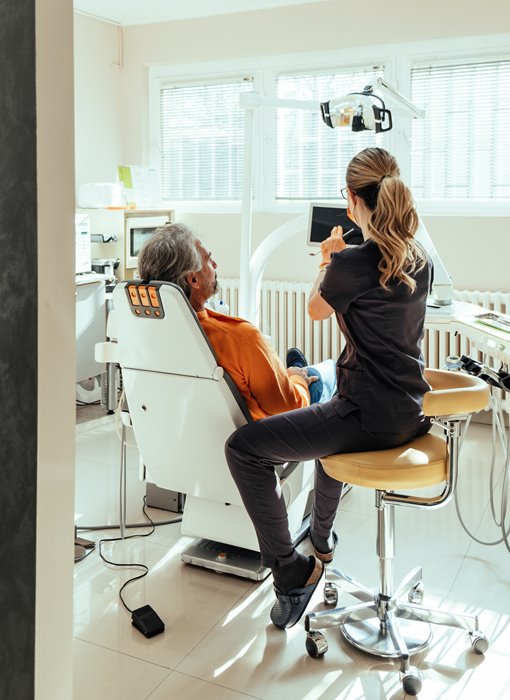
From a risk management perspective, it is important to distinguish medical consultation from the concept often referred to as “medical clearance.” Medical clearance implies a transfer of responsibility that does not occur in practice or law. Courts, licensing boards, and expert reviewers consistently view the operating dentist as the clinician responsible for dental treatment planning, patient selection, and management of procedural risk.
Medical consultation is best understood as a structured exchange of information intended to inform, rather than replace, the dentist’s independent clinical judgment.
In sedation-related claims, consultation failures typically fall into one of three categories:
  • Consultation is not obtained when it would be prudent.
  • Consultation is narrowly focused on a single issue (e.g., anticoagulation), without consideration of other medical issues and sedation-related physiological risk.
  • Consultation is obtained, but the information provided does not meaningfully inform the sedation or treatment setting decision.
A defensible approach to medical consultation requires taking into account baseline patient status, stability of underlying conditions, and the physiological demands of the planned procedure and sedation depth. The American Society of Anesthesiologists (ASA) Physical Status Classification is often referenced in expert analysis and provides a useful starting point for stratifying risk. Patients with stable, well-controlled chronic disease (often categorized as ASA II–III) may be reasonable candidates for office-based procedures with appropriate safeguards. In contrast, patients with unstable disease, recent exacerbations, or significant cardiopulmonary compromise (often ASA IV or higher) may warrant deferral of elective care, enhanced consultation, or referral to a higher-acuity setting.
In CNA claim experience, sedation-related losses frequently involve patients with overlapping risk factors—such as obesity, obstructive sleep apnea (OSA), cardiopulmonary disease, renal impairment, or recent acute illness—where consultation was absent or incomplete. In these cases, defense experts often concluded that the dentist underestimated how multiple conditions and associated medications interacted to increase sedation risk, even when individual conditions were known and disclosed.
Equally important is how consultation requests are framed. Requests that simply ask whether a patient is “cleared for dental treatment” offer limited value and tend to generate generalized responses that do little to support defensibility. In contrast, effective consultation requests are procedure-specific and risk-focused. They typically describe the planned dental intervention, anticipated sedation approach, duration of treatment, and targeted questions regarding physiological stability, medication management, or appropriate treatment setting. If a consultant’s response does not address these factors, the dentist should view the consultation as incomplete.
Documentation plays a central role in translating consultation into defensibility. Records should reflect not only that consultation occurred, but how the information informed the dentist’s decision to proceed, modify treatment, defer care, or refer. When adverse outcomes are later reviewed, investigators and experts focus on whether the dentist’s actions demonstrate a thoughtful, individualized risk assessment grounded in available information—not merely whether a consultation form exists in the record.
As illustrated in the following case studies, consultation that is absent, narrowly scoped, or disconnected from sedation decision-making frequently becomes a central weakness in the defense of sedation-related claims. A documented, well structured, risk-based consultation process may reinforce patient safety and may help provide tangible evidence that treatment decisions were made deliberately and in the best interest of patient care.

Representative Case Studies

Case Study 1. Alleged Wrongful Death Following Intended Anxiolysis During Dental Extractions

This case illustrates how medications prescribed with the intent to reduce anxiety may constitute procedural sedation, triggering additional clinical, regulatory, and liability obligations.

Practitioner: General dentist


Patient: Male, age 75, with a history of type 2 diabetes, congestive heart failure, hypertension, chronic kidney disease, stroke, obesity (BMI 35), OSA

Overview
This case involves the death of a medically complex elderly patient following extensive dental extractions performed in a dental office setting. Although the dentist only intended to provide anxiolysis, the medications administered met the definition of procedural sedation under applicable clinical guidelines and state regulations, resulting in allegations related to inappropriate prescribing, lack of a required sedation permit, inadequate monitoring, and failure to respond to a medical emergency.

Case Summary
The patient presented as a new patient with advanced dental and periodontal disease. After discussion of treatment options, the dentist recommended extraction of 22 teeth with subsequent implant-supported dentures. The patient expressed anxiety about dental treatment, and the dentist recommended pre-procedural medication to reduce stress.

The patient’s medical history included multiple significant co-morbidities and anticoagulant therapy (aspirin and rivaroxaban). Concerned about bleeding risk, the dentist sought limited medical input focused solely on stopping and restarting anticoagulants. No broader medical consultation was requested regarding the patient’s cardiac, pulmonary, renal, or sleep apnea history, nor regarding the planned medications and duration of treatment.

Approximately one hour before surgery, the patient self-administered amoxicillin, oxycodone/acetaminophen, and two 0.5 mg triazolam tablets. Pre-procedure vital signs included a blood pressure of 160/85 and an oxygen saturation of 85%. The patient stated that this oxygen level was “normal” for him. Despite this finding, the dentist proceeded with treatment.

During the lengthy extraction procedure, vital signs were not actively monitored. As the procedure progressed, staff observed that the patient’s breathing became shallow and he did not take deep breaths when prompted. Supplemental oxygen was eventually administered, but only after a delay while equipment was located. Near the end of the procedure, the patient became unresponsive. Vital signs were then assessed, revealing hypotension and oxygen saturation around 80%. CPR was initiated and emergency medical services (EMS) were contacted. Despite prolonged resuscitative efforts by EMS, the patient was pronounced dead.
Allegations and Analysis
Plaintiff experts alleged wrongful death resulting from negligent care, including failure to recognize that the medication regimen constituted sedation, failure to possess or comply with sedation permitting requirements, inadequate patient monitoring, and failure to respond promptly to signs of respiratory compromise.
Defense experts could not support the dentist’s care. Although the patient disclosed an extensive medical history, the dentist’s limited review and narrow medical consultation were viewed as insufficient. The administered medication combination, patient’s baseline hypoxemia, lack of required monitoring for minimal or moderate sedation, and absence of emergency preparedness documentation collectively undermined defensibility.
Outcome
Given the absence of expert support and significant damages exposure, the case settled at mediation for just over $1,000,000. A regulatory investigation followed, resulting in immediate license suspension; the dentist later surrendered his license.

Case Study 2. Office-Based Moderate Sedation with a Contracted Anesthesia Provider Allegedly Results in Patient Death

This case demonstrates that the use of an external anesthesia provider does not eliminate the dentist’s responsibility for patient selection, procedural oversight, and emergency preparedness.

Practitioner: General dentist; contracted certified registered nurse anesthetist (CRNA)


Patient: Male, age 55, with OSA, asthma, chronic obstructive pulmonary disease (COPD),
obesity, and recent treatment for acute bronchitis

Overview
This case involves the death of a patient following dental extractions performed under office-based moderate sedation administered by a CRNA. The claim highlights issues of patient selection, monitoring, emergency response, medication choice, and shared liability between the dental practice and an external anesthesia provider.
Case Summary
The patient sought care for extraction of two non-restorable mandibular molars. Due to dental anxiety, he requested “sleep dentistry.” The treatment plan involved moderate sedation administered in the dental office by a contracted CRNA.
Several days prior to the procedure, the patient visited urgent care with cough, wheezing, and dyspnea. He was diagnosed with acute bronchitis and received intramuscular dexamethasone. This information was not disclosed to the dental practice prior to surgery.
Sedation began with administration of midazolam, along with ondansetron and famotidine. During the procedure, oxygen saturation remained borderline despite supplemental oxygen. Later, labetalol was administered to address elevated blood pressure. As oxygen saturation deteriorated, airway adjuncts were placed. Following the procedure, the patient failed to respond to verbal or painful stimuli. Flumazenil was administered twice without improvement.
The patient briefly became combative during emergence, then became apneic and unresponsive. Ventilatory support and resuscitative measures were initiated, and EMS was called several minutes later. EMS documented asystole as the initial rhythm. Despite continued advanced life support interventions, the patient died in the emergency department.
The medical examiner attributed death to hypertensive and atherosclerotic cardiovascular disease following dental extractions, with contributing pulmonary disease and obesity.
Allegations and Analysis
Allegations included inadequate preoperative assessment, inappropriate patient selection for office-based sedation, insufficient monitoring and documentation, improper medication selection (including labetalol in a patient with reactive airway disease), delayed recognition of respiratory compromise, and inadequate emergency preparedness.
From a defense perspective, documentation deficiencies were central. Records lacked a complete preoperative respiratory assessment, baseline vital signs, and comprehensive intraoperative monitoring data. Importantly, end-tidal carbon dioxide (ETCO2 ) was not monitored. Both the 2016 and 2025 ADA guidelines state that ETCO2 “must” be monitored for moderate sedation patients. Furthermore, monitoring ETCO2 may provide life-saving benefits for patients with COPD, asthma and other respiratory conditions. Expert reviewers opined that the patient’s co-morbidities and recent respiratory illness made him a poor candidate for office-based sedation and that care should have been deferred or performed in a hospital setting.
Although sedation was administered by an independent CRNA, plaintiff experts argued that the dentist retained responsibility for patient selection and overall procedural safety. Under theories of apparent agency and shared liability, the dental practice was exposed despite utilization of a contracted anesthesia provider.
Outcome
Negative expert opinions for both the anesthesia provider and the dentist, combined with significant wrongful-death exposure, drove an early policy-limit settlement for both providers. Total incurred for the insured dentist exceeded $1,000,000.

Key Risk Drivers in Sedation-Related Claims

Across CNA closed claim files, several recurring risk drivers stand out:

Patient Assessment and Selection ›
Medication
Management ›
Medication
Management ›

Monitoring and Documentation ›

Monitoring and Documentation ›
Emergency Preparedness and Delayed Escalation ›
Emergency Preparedness and Delayed Escalation ›
Shared Liability and
Apparent Agency ›
Shared Liability and
Apparent Agency ›
Practices that deliver sedation or contract with anesthesia providers benefit from clearly defined escalation thresholds, regular emergency drills,and documentation that staff are trained to act decisively when patient status deteriorates.

Risk Control Considerations for Dental Practices

Dentists may wish to consider the following risk control strategies:
  • Perform and document a focused pre-procedure medical assessment, including airway and respiratory risk.
  • Implement a defensible approach to medical consultation that supports the dentist’s independent risk assessment and treatment-setting decision, including whether to proceed, modify treatment, defer care, or refer to a higher-acuity setting.
  • Match the treatment setting and sedation depth to the patient’s overall risk profile.
  • Understand state specific sedation permit requirements and their relationship to national guidelines.
  • In addition to training and permit requirements for a dentist to provide dental office sedation services, individual states also may impose requirements on dentists who contract with sedation and anesthesia providers.
  • Ensure monitoring and documentation are appropriate to the sedation level provided, whether administering sedation, or working with a sedation provider.
  • Maintain explicit patient discharge and medical emergency management protocols, conduct regular emergency drills, and document emergency response training.
  • Clearly define and disclose relationships with contracted anesthesia providers to mitigate the risk of apparent agency/vicarious liability associated with their services.

Conclusion

Procedural sedation can offer meaningful benefits to patients when applied thoughtfully and safely. However, CNA claim experience demonstrates that when sedation-related adverse events occur, they often are the basis of high-severity claims that are challenging to defend. By understanding common risk drivers and incorporating structured risk control practices, dentists can enhance patient safety while reducing professional liability exposure.

Resources

Stay informed with Dentist's Advantage

Receive additional risk management insights, industry updates, and educational resources designed to help protect your practice and support your professional success.